

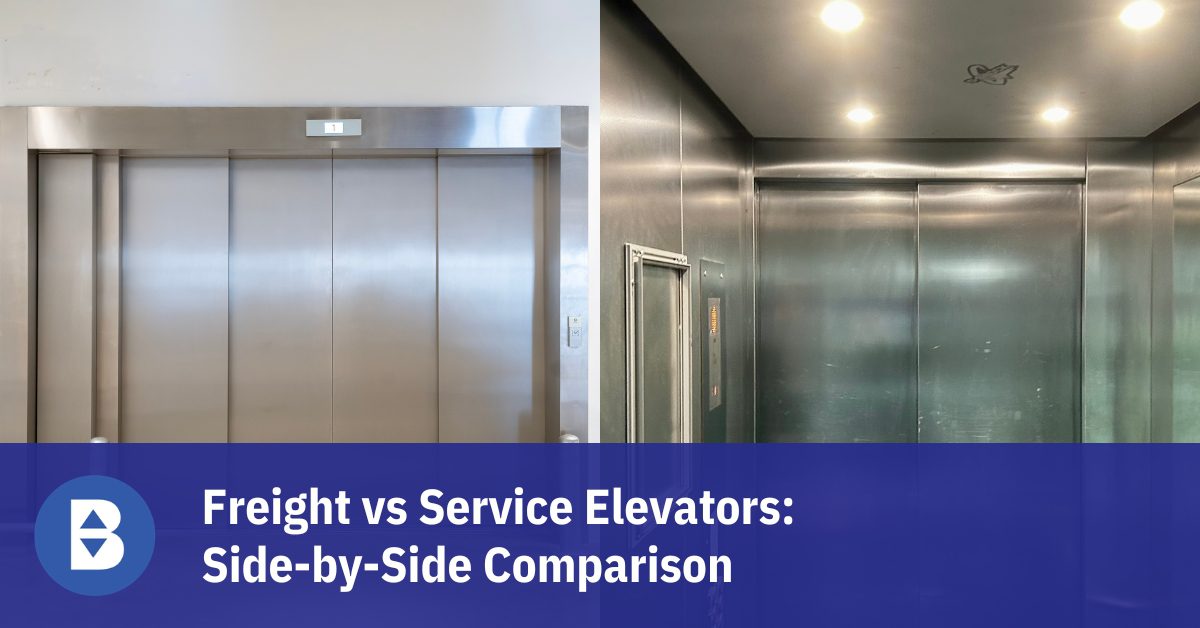
Freight vs Service Elevators: Side-by-Side Comparison
May 6, 2026Most people only know as much about elevators as they have experienced personally or seen in movies such as Mission Impossible, Spiderman: Homecoming and Avengers: Captain America Winter Soldier. For building and business owners, understanding the types of elevators, their features, and load capacity is key to recognizing the critical role they can play in your building.
Before we begin explaining the different types of elevators that could be used in your building, it is important to note that, while many movies and non-experts use the terms freight, service and passenger elevators seemingly interchangeably, the ASME A17.1 / CSA B44, Safety Code for Elevators and Escalators is responsible for defining, classifying, and ensuring the safety of different elevator types in North America.

The Functional Workhorse: The Freight Elevator
Freight Elevators are commonly found in warehouses, manufacturing plants, shipping centers, high-rise office buildings, hotels, hospitals, and retail facilities, as they are primarily used to haul large items. Unless you have worked in a manufacturing facility, commercial building or retail location, you may have never stepped foot into a freight elevator.
This type of elevator is specifically engineered to lift heavy items like equipment, cargo, pallets, and large load items found in manufacturing, hospitals and commercial businesses. It is the workhorse of elevators, lifting up to 100,000 pounds of cargo at any one time.
Since freight elevators are designed for lifting rather than comfort and aesthetics, they are usually very utilitarian-looking, with few frills or decor, unlike their cousins, the passenger elevators. They also move more slowly and have reinforced floors and hardened steel walls to handle the loads and equipment needed to move them to and from the car.
One rather unique feature of freight elevators is the doors. Most freight elevators have vertically opening doors rather than the typical horizontal door openings. The reason for this is, again, utilitarian. To make it easier for the doors to open to the maximum width of the car, the doors open vertically, giving more room for forklifts or machinery used to haul loads.
The Multitasker: Service Elevators
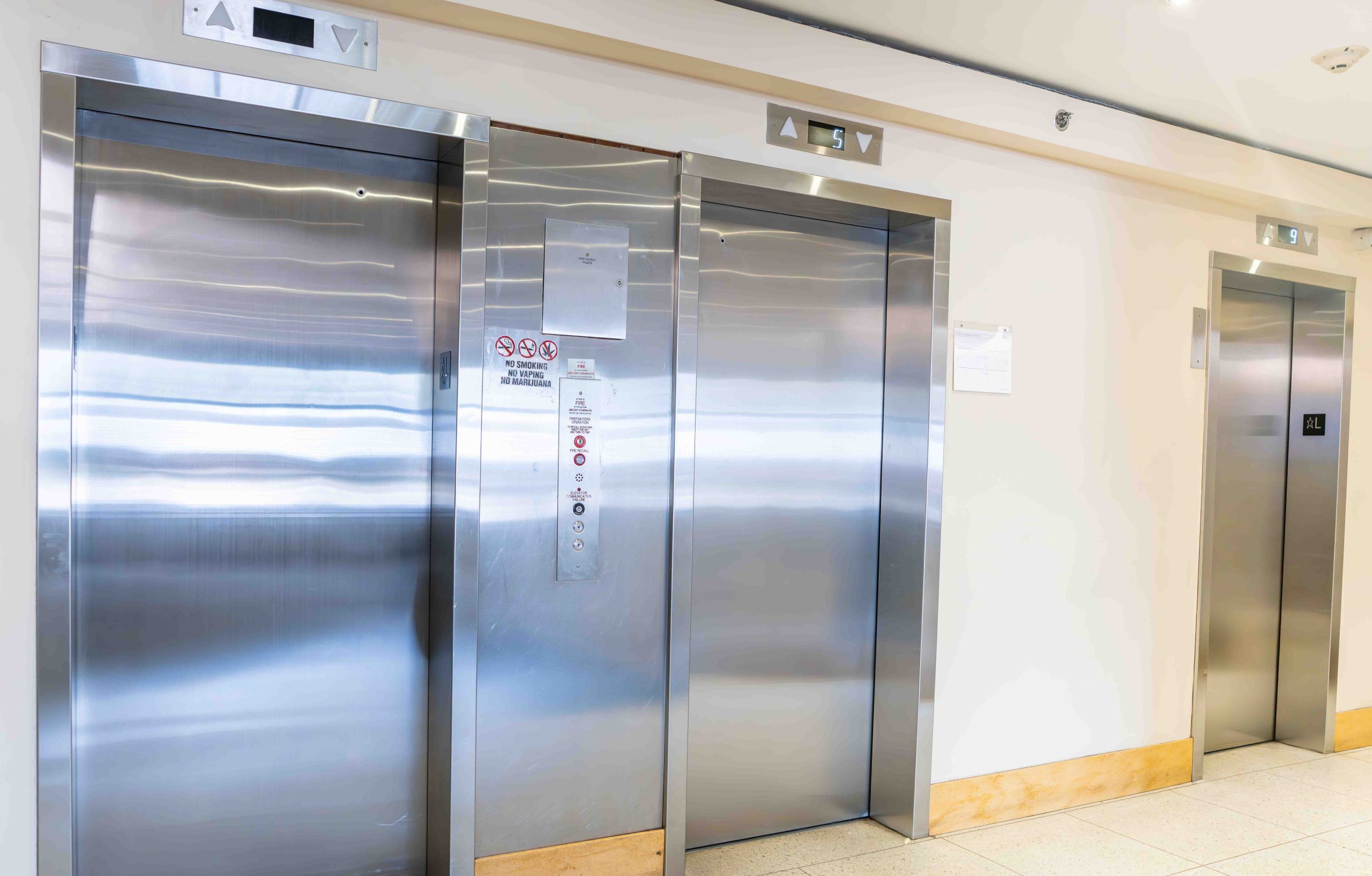
According to the elevator code mentioned above, service elevators are considered passenger elevators, but they offer several different services. Unlike the workhorse freight elevator, the service elevator is a multitasker. Service elevators can carry passengers and/or light-duty carts, hospital beds or dollies. They are often used by employees of buildings, such as vendors delivering goods, housekeeping in hotels and hospital beds in medical facilities.
Service elevators have a weight capacity of around 5,000 pounds and use horizontal-opening doors. They are mainly used for transporting employees, pedestrians, commercial vendors and goods. In short, service elevators are modified passenger elevators designed to handle slightly larger items.
Choosing the right vertical transportation for your property is more than just about square footage; it is about matching the right hauling capacity and versatility to your building’s needs. If you are planning a new installation or need help defining the specific ASME code requirements for your building’s vertical transport system, contact Buckley Elevators today for a comprehensive consultation.