

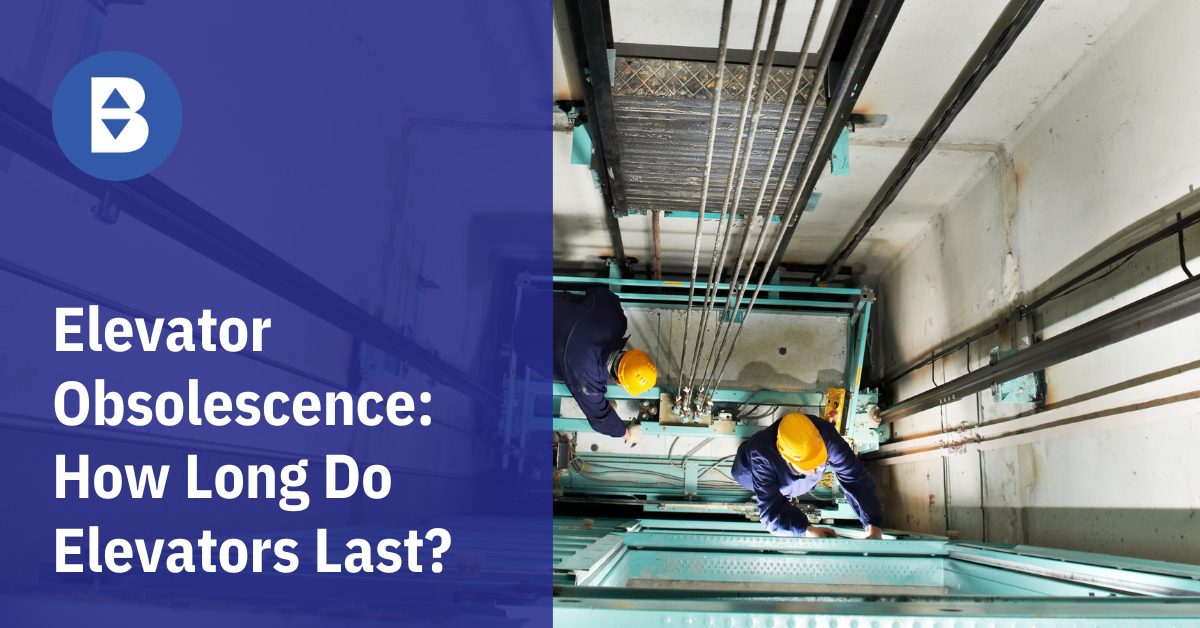
Elevator Obsolescence: How Long Do Elevators Last?
April 8, 2026In addition to electrical and plumbing systems, elevators are often one of the most complex and critical systems in a residential or commercial building. They are relied on heavily by people who frequent the building, both residents and visitors alike. Similar to other modern equipment, such as computers, phones, and automobiles, elevators are subject to wear and have a finite lifespan.
Given the importance of elevator systems to the day-to-day operation of residential and commercial buildings, let’s take a closer look at what obsolescence is, what a typical life span is, and the key variables that can lengthen or shorten an elevator’s expected lifespan.

What is Elevator Obsolescence?
Obsolescence, by definition, means that something is out of date or obsolete. In terms of elevators, obsolescence means the technology or its components need to be replaced or modernized.
The lifespan of an elevator typically ranges from 20 to 30 years before it requires substantial modernization or full replacement. Key mechanical components, such as controllers and door operators, often need updating every 20-25 years, while robust structural elements and hoist machines can last 30 to 50 years or more. The elevator’s longevity is strongly influenced by its usage, operating environment, and maintenance quality.
Safety is always the top priority when considering the equipment’s lifespan. The American National Standards Institute (ANSI) standardizes codes and safety regulations across the US to ensure that, regardless of equipment age, it is safe to use. According to ANSI, safety standards and codes vary by state and jurisdiction.
Key Variables to an Elevator’s Life Cycle
In general, elevator lifespan depends on multiple factors, including usage patterns, maintenance frequency, and the physical environment.
Routine Maintenance & Inspections
Elevators are complex machinery that not only need annual inspections but also regular maintenance. In terms of inspections, U.S. commercial elevators must undergo a mandatory official inspection by state or local authorities at least annually, though some areas require them semi-annually. Beyond this, elevators require specific safety checks: Category 1 (no-load) safety tests are conducted annually, and Category 5 (full-load) safety tests are conducted every 5 years.
Routine maintenance, such as testing systems to proactively identify issues, can not only help your elevator operate more efficiently but also extend its efficiency beyond the 20-year expected life cycle. Lack of quality maintenance by a professional elevator operator could lead to the opposite result.
Usage Patterns
One variable that elevator owners should be aware of, which can cause unnecessary wear and tear and shorten the system’s lifespan, is misuse. Misusing an elevator can include failing to observe posted weight and capacity limits or using it in a manner inconsistent with its design.
Physical Environment
Environmental factors that can impact the lifespan of an elevator system include exposure to moisture, seismic activity, such as earthquakes or proximity to underground subway lanes, and temperature fluctuations.
To prevent these weather extremes and physical environments from impacting the life expectancy of your elevator system, it is critical to maintain a moisture barrier between the outside and inside, as well as maintain a steady temperature/humidity in the control and equipment rooms.
Managing Elevator Life Expectancy
While an elevator’s robust structural elements can last for decades, the entire system’s operational lifespan is typically 20 to 30 years, heavily dependent on quality maintenance, usage, and environment. Proactive care, regular inspections, and timely updates to critical components like controllers and door operators are essential to maximizing safety and longevity.
Don’t wait for a breakdown to act! Contact Buckley Elevator today to schedule professional maintenance and ensure your building’s most critical system operates efficiently and safely for years to come.